
Table of Contents
- Why Does My Car Look Streaky After Washing?
- What You’ll Need to Remove Streaks From Car Glass
- How to Clean Car Windows Without Streaks: Step-by-Step
- How to Remove Streaks From Car Windshield (Inside and Out)
- The Best Cloth for Cleaning Car Windows
- Why Streaks Come Back: Troubleshooting Hard Water and Wiper Blades
- Conclusion
- Frequently Asked Questions
Last Updated: October 12, 2026
Why Does My Car Look Streaky After Washing?
If you want to know how to remove streaks from car glass, the answer starts with one idea: streaks are almost never a soap problem. They are a drying problem. When water dries on its own, it leaves behind everything that was dissolved in it.
Those marks show up as smears, a milky film, or white spots. In an express tunnel car wash, the cause is usually one of two things.
Interior vs. Exterior: Two Different Problems
Interior streaks and exterior streaks come from different sources, so they need different fixes.
Inside the car, a cloudy film builds up over time. Plastics, vinyl, and upholstery release tiny amounts of vapor as the car sits in the heat. That vapor settles on the glass and bonds to it.
Outside the car, the culprit is usually mineral-heavy water, road grime, or worn wiper blades. The fix for each is different, so diagnose before you scrub.
The most common mistake is using one method for both sides of the glass. Wiping the inside with the same dirty towel you used outside just moves oil around. Use separate towels for inside and outside.
What You’ll Need to Remove Streaks From Car Glass
You do not need a shelf of products. You need the right five items and a cool surface. Here is what actually works.
- Two or more clean microfiber towels
- A spray bottle of glass cleaner
- Distilled water for mixing or rinsing
- A soft detailing brush for vents and seams
- A second bucket of clean water for rinsing towels
What to Skip: Paper Towels, Ammonia, and Direct Sun
Paper towels are the biggest offender. They shed lint and leave wood-fiber residue that looks exactly like a streak. Skip them.
Ammonia-based cleaners can damage window tint and some interior plastics. If your car has tint, choose an ammonia-free cleaner instead.
Direct sun is the third trap. Hot glass dries the cleaner before you can wipe it, and that flash-drying is what leaves the haze.
How to Clean Car Windows Without Streaks: Step-by-Step
Total Time: 15-20 minutes
Difficulty: Beginner
Work one section at a time, and let the towel do the work.
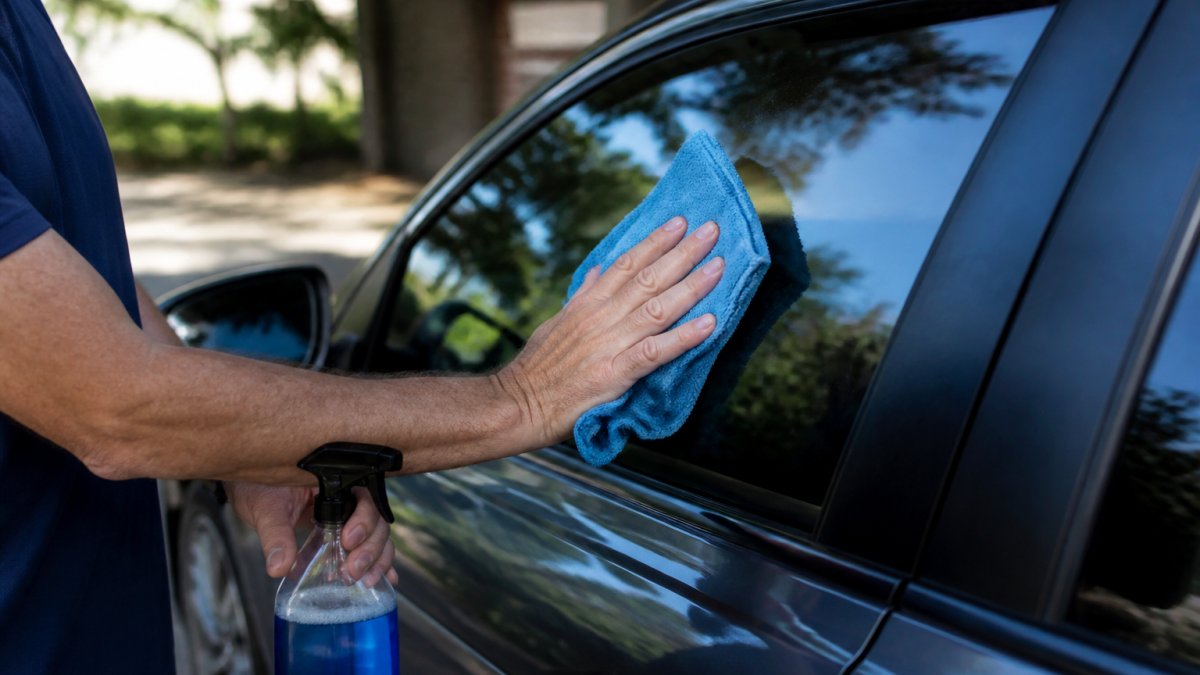
Step 1: Prep the Glass and Work in the Shade
Move the car out of direct sunlight and let the glass cool. Clean glass in the shade, never on hot glass.
Next, lift your wiper blades and wipe the rubber edge with a damp towel. Grit trapped in the blade is a hidden source of streaks.
Step 2: Spray, Crosshatch, and Buff
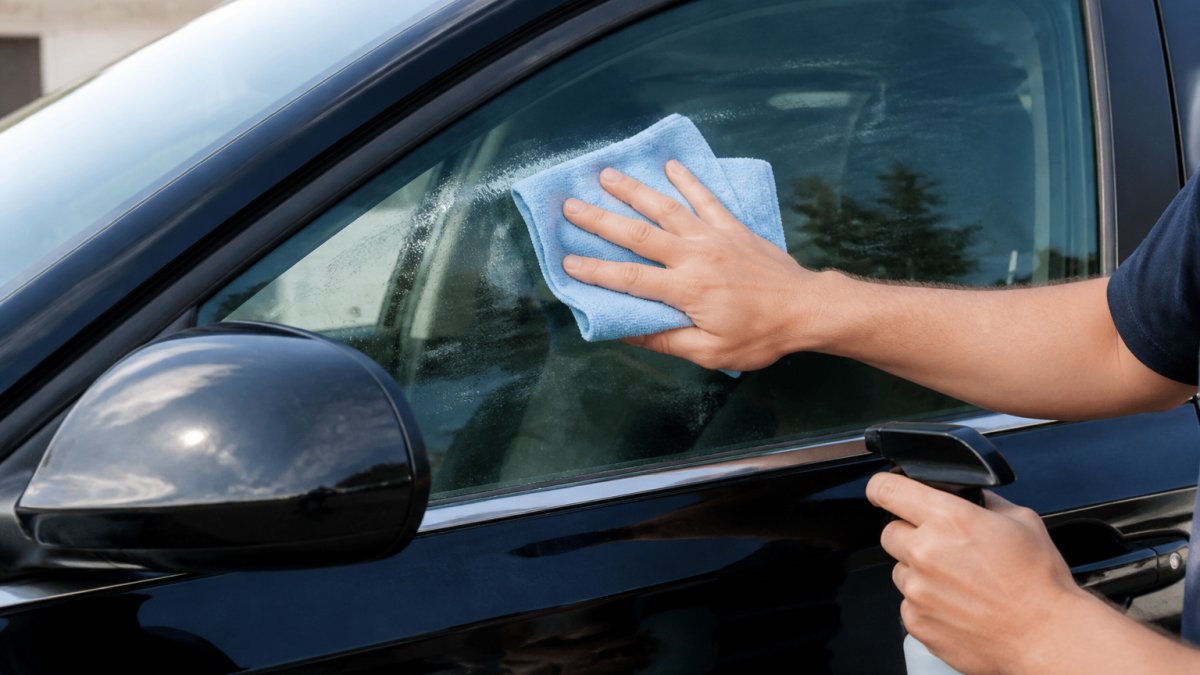
Spray the cleaner onto the towel, not the glass. This stops overspray from spotting your paint or dashboard.
Then wipe in a crosshatch pattern: side to side on the outside, up and down on the inside. The two directions let you see which pass left a mark.
Finally, flip to a dry section of the towel and buff the glass dry. Dry it before the cleaner evaporates on its own.
How to Remove Streaks From Car Windshield (Inside and Out)
To remove streaks from car windshield glass, treat the outside and inside as two separate jobs with two separate toolkits. The windshield collects the most road film on the outside and the most outgassing film on the inside, so it needs the most attention, and the two contaminants respond to different chemistry.
Outside the Windshield: Road Film, Bug Residue, and Wiper Trails
Start by knocking down loose dust and road grime. A dry towel dragged across gritty glass grinds those particles in and leaves fine scratches that read as streaks in low sun.
- Rinse or wipe off loose dust first.
- Spray cleaner onto a folded microfiber towel, not the glass, to avoid overspray on paint and trim.
- Wipe in a crosshatch pattern, side to side, then up and down, so you can see which pass left a mark.
- Flip to a dry section and buff before the cleaner flashes off.
If spots remain after buffing, they are almost certainly mineral deposits from hard water, not soap scum. Ordinary glass cleaner will not dissolve calcium and magnesium; it just smears them. See the troubleshooting section below for the escalation path.
Inside the Windshield: Outgassing Film and the Dash Edge
The inside film is not road dirt. It is plasticizer and volatile organic compounds released by the dashboard, door panels, and vinyl trim as the cabin heats up. That vapor condenses on the coolest surface in the cabin, the glass, and bonds into a thin, milky haze. It comes back every few weeks because the source keeps emitting.
Key differences from the outside job:
- Use less liquid. Overspray and drips run down into the dash, vents, and defroster slots, where they leave drip marks and can stain plastics. Spray the towel, not the glass, and keep the towel barely damp.
- Use an ammonia-free cleaner if you have aftermarket tint. Ammonia attacks the adhesive layer on many tint films and can cause bubbling, purple discoloration, or delamination over time. A tint-safe, ammonia-free cleaner is the default choice on any car with film.
- Reach the bottom edge. The strip where the glass meets the dash is where film builds first and where your fingers cannot reach. Wrap a microfiber towel around a flat sponge, a foam applicator pad, or a dedicated windshield wedge tool.
- Do the top edge and corners too. Film hides in the perimeter, and that is exactly where sun glare hits.
Coatings, Overspray, and What Not to Use
If your windshield has a factory or aftermarket hydrophobic coating, skip abrasive polishes and aggressive mineral removers on that glass, they strip the coating and leave you with a patchy surface that beads unevenly. Clean coated glass with a mild, ammonia-free cleaner and a clean microfiber, and reapply the coating per its instructions if performance drops.
Also watch for overspray: interior dressings, tire shine, and aerosol air fresheners drift onto glass and leave a greasy film that behaves exactly like a streak.
Work the inside of the windshield in two passes: a damp pass to lift film, then a dry pass with a fresh towel section to buff. One pass with a wet towel just moves the film around.
The Best Cloth for Cleaning Car Windows
The best cloth for cleaning car windows is a clean, plush microfiber towel. Microfiber grabs dust and oil instead of pushing it around, and it holds water without shedding lint.
Two rules matter more than the brand:
- Use a clean towel every time. A dirty towel just redeposits oil.
- Rotate to a fresh side as you go. Fold the towel into quarters for eight clean surfaces.
A lint-free cloth works in a pinch, but paper towels do not. They leave fibers and streaks behind.
Why Streaks Come Back: Troubleshooting Hard Water and Wiper Blades
If streaks return right after you clean, the problem is not your technique, it is the source. Use this symptom-to-fix guide to diagnose before you buy another product.
Step 1: Identify the Symptom
| Symptom | Likely Cause | Fix |
|---|---|---|
| White, chalky spots that will not wipe off | Hard water minerals (calcium, magnesium) | Distilled water in your mix, then a dedicated mineral remover |
| Smears that appear after rain or wiper use | Worn or contaminated wiper blades | Clean the blade edge, then replace if chattering or skipping |
| Milky film on the inside, returns in weeks | Interior outgassing from plastics and vinyl | Ammonia-free cleaner plus a flat pad to reach the dash edge |
| Lint left behind | Paper towels or a dirty towel | Switch to clean microfiber, rotate to a fresh fold |
| Greasy smear that resmears no matter what | Dressing, tire shine, or aerosol overspray | Isopropyl alcohol wipe, then glass cleaner |
| Rainbow or oily sheen on the outside | Road oil film or wax residue | Wash with a degreaser-safe soap, then glass cleaner |
| Haze that reappears only on one side | Wiper blade tracking or a worn blade insert | Replace the blade; check for a bent arm |
Step 2: Escalate Mineral Deposits Safely
Hard water spots are the most common reason a windshield looks clean but still streaks in the sun. The minerals etch into the glass surface and ordinary cleaner cannot lift them.
Escalate in this order, stopping when the spot lifts:
- Distilled water rinse. Mix your cleaner with distilled water, not tap. Tap water reintroduces the minerals you are trying to remove.
- A dedicated water-spot or mineral remover. These are formulated with mild acids that dissolve calcium carbonate without scratching. Follow the label dwell time, usually under a minute, and do not let it dry on the glass.
- A fine clay bar or synthetic clay mitt with lubricant, for deposits sitting on the surface rather than etched in.
- A glass polish applied by hand with a foam pad, only if the above fail. This is mildly abrasive and removes a microscopic layer of glass.
Do not use: steel wool, scouring pads, abrasive kitchen cleaners, or a razor blade on curved or coated glass. These scratch, strip coatings, and can void a windshield’s factory coating.
Step 3: Rule Out Wiper Blades
Wiper blades are the second most common repeat offender. A blade that chatters, skips, or leaves a rainbow trail is depositing rubber residue and road film on every pass, no cleaner fixes that.
- Wipe the rubber edge with a damp microfiber to remove grit.
- If the blade is cracked, hardened, or more than about a year old, replace it. Most manufacturers recommend replacement every 6 to 12 months depending on sun exposure and use.
- Check the arm for a bend or weak spring; a blade that does not sit flat will streak regardless of age.
Step 4: Confirm the Fix
After treating the source, do one final pass: clean glass, clean microfiber, cool surface, shade. If the streak is gone in direct sun at a low angle, you have solved the cause. If it returns within a week, the source is still active, most often interior outgassing or a coating that needs reapplication.
Streaks are a symptom, not the problem. Diagnose the source, minerals, wiper blades, outgassing film, or overspray, and the streak-free finish follows.
Conclusion
Chasing streaks with more product rarely works. The fix is diagnosing the source, using clean microfiber, and working on cool glass in the shade.
When you want that clear result without the driveway work, Heroes Car Wash provides professional express tunnel car wash services. Our express tunnel gets you in and out fast, and our unlimited membership plans keep fleet vehicles and daily commuters looking sharp. Get started with Heroes Car Wash and drive away with glass you can actually see through.
Frequently Asked Questions
Why does my car look streaky after washing it?
Streaks usually come from one of three sources: cleaning in direct sunlight so the solution dries before you wipe, using a dirty or low-quality towel that just moves residue around, or failing to remove loose dust first. Interior glass can also develop a film from dashboard outgassing that traps dirt. Once you identify which source applies, fixing it is straightforward.
What do auto detailers use to clean windows?
Professional detailers typically reach for an ammonia-free glass cleaner, two or more clean microfiber towels, and a spray bottle. They work in the shade, use a crosshatch wiping pattern, and rotate to a dry towel for the final buff. Some use distilled water or a diluted isopropyl alcohol mix for tough film. The tools matter less than the technique: clean towels and a cool glass surface.
Can household glass cleaner be used on car windows?
Household glass cleaners that contain ammonia can damage window tint and dry out rubber seals over time. Check the label before using one on your car. An ammonia-free cleaner is safer for tinted glass and dashboard-adjacent surfaces. If you are unsure what is in your household product, a dedicated automotive glass cleaner or a simple distilled water and white vinegar mix is the safer choice.
Should you clean car windows in direct sunlight?
No. Direct sunlight heats the glass, which makes your cleaning solution evaporate before you can wipe it off. That rapid drying is one of the most common causes of streaks. Park in the shade or wait for a cooler part of the day. If you cannot avoid the sun, clean one small section at a time and buff immediately so the solution never sits on hot glass.