
Table of Contents
- What You’ll Need Before You Wash a Truck Bed
- Step 1: Pre-Rinse Loose Dirt, Debris, and Mud
- Step 2: Pick the Best Cleaner for Truck Bed Grime
- Step 3: Mix, Apply, and Let the Cleaner Dwell
- Step 4: Agitate With a Soft Brush or Push Broom
- How to Clean a Truck Bed Liner by Surface Type
- How to Remove Grease From a Truck Bed
- Can a Truck Bed Go Through a Car Wash?
- Frequently Asked Questions
Last Updated: October 21, 2026
What You’ll Need Before You Wash a Truck Bed
To wash truck bed surfaces, you remove loose debris, road grime, oil, and stains from the cargo area using water, a suitable cleaner, agitation, and a thorough rinse. That open cargo area collects everything the road throws at it.
Gather your supplies first. A mid-job run to the store wastes time.
- A garden hose with a spray nozzle
- Two buckets (one for soap, one for rinse water)
- Car-wash soap for light dirt
- A degreaser for oil and grease
- A soft brush or push broom with a long handle
- A sponge or microfiber mitt
- A spray bottle for spot treatments
- Safety glasses and gloves
Check the EPA’s guidance on outdoor water use and runoff before you start. Soapy runoff should never flow straight into a storm drain.
Park on grass, gravel, or a tarp when you can. It keeps runoff out of the street and gives you a softer surface if you drop a tool.
Step 1: Pre-Rinse Loose Dirt, Debris, and Mud
Start by pulling out everything in the bed. Tools, tie-downs, and cargo mats all trap grit underneath. Then sweep or shovel out the heavy stuff before any water touches the surface.
A pre-rinse does three things. It removes loose dirt so you do not grind it around. It softens caked mud. And it lets you spot real stains versus simple dust.
Work from the front of the bed toward the tailgate. Use a steady stream from the hose, not a hard blast. Push mud and debris out the back instead of letting it pool in the corners.
For heavy mud, let the water soak for a minute. Then hit it again. A second pass loosens what the first one missed.
Step 2: Pick the Best Cleaner for Truck Bed Grime
The best cleaner for a truck bed depends on what you are removing. Light dust and road film call for car-wash soap. Oil, grease, and fuel residue need a degreaser. Matching the product to the soil saves scrubbing and protects the surface.
Car-Wash Soap for Light Dirt
Car-wash soap is the safe default for most beds. It lifts everyday dirt without stripping wax or dulling a painted surface. Mix it in a bucket following the label directions, then apply with a sponge or soft brush.
Dish soap works in a pinch, but use it sparingly. It cuts through grime and also cuts through protective coatings. Save it for rare deep cleans.
Degreaser for Oil and Grease
Oil and grease need a dedicated degreaser. Spray it directly on the stain, give it a few minutes, then agitate. A citrus-based or water-based degreaser is easier on liners than harsh solvents.
Test any degreaser on a hidden spot first. Some products can discolor a spray-in liner if left too long.
Step 3: Mix, Apply, and Let the Cleaner Dwell
Mix your cleaner exactly as the label says. Too strong can stain a liner. Too weak does nothing. Fill one bucket with the soap mix and the second with clean rinse water.
Apply the cleaner from the top of the bed down. Coat the walls first, then the floor. Work in sections so the product does not dry before you scrub.
Dwell time matters. Give the cleaner three to five minutes to break down grime. Do not let it dry on the surface. On a hot day, mist it with water to keep it active.
Letting cleaner dry on a hot bed liner can leave a chalky film or a permanent streak. Work in shade or rinse before it sets.
Step 4: Agitate With a Soft Brush or Push Broom
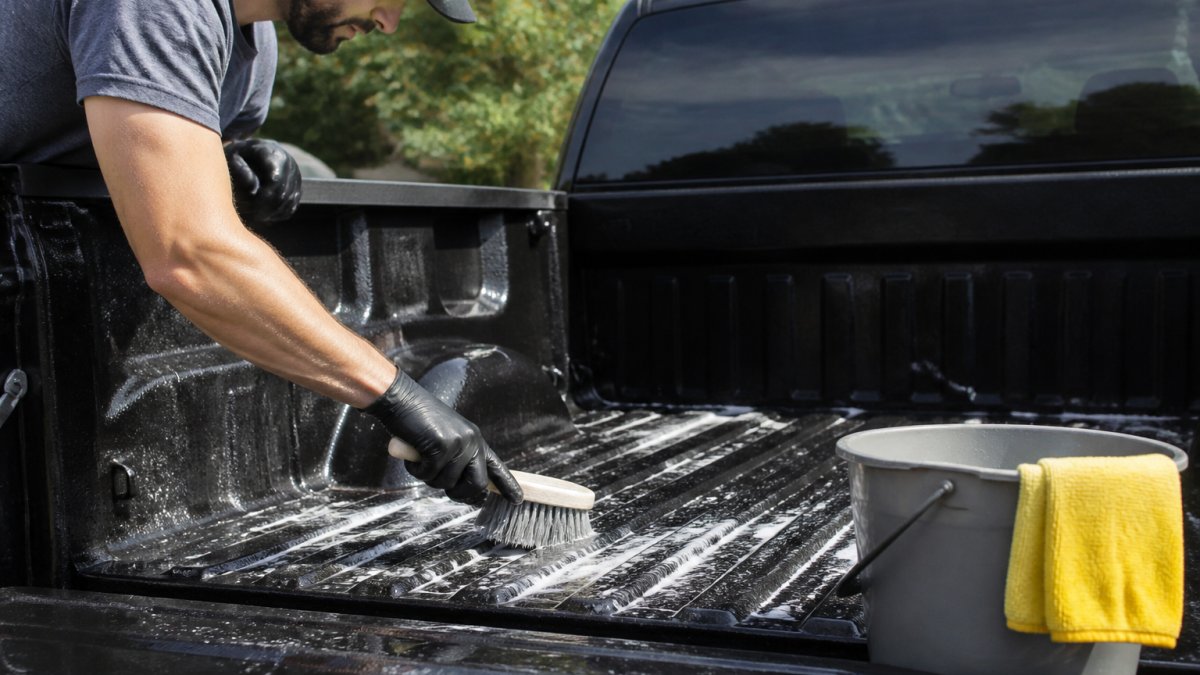
Agitation is where the real cleaning happens. A soft brush or long-handled push broom lifts dirt the cleaner has loosened. Use a brush with soft bristles, never a stiff wire brush that can scratch a liner.
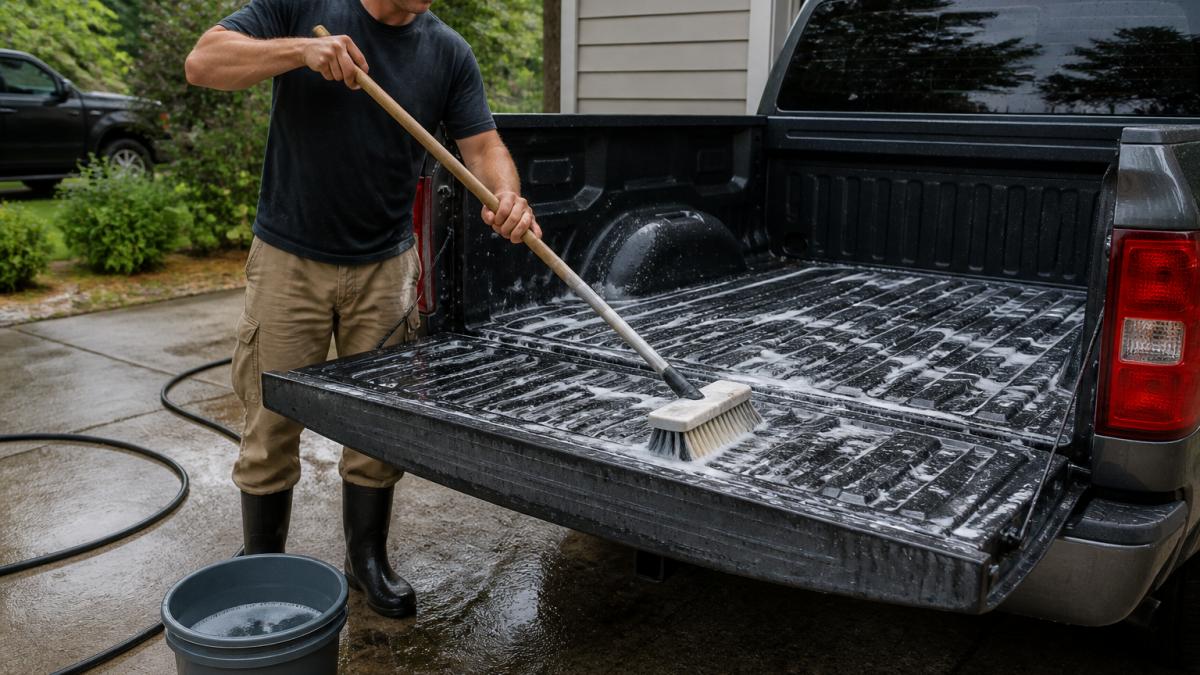
Scrub the walls and floor in overlapping passes. Pay extra attention to the corners and the tailgate seam, where grit collects. Dip your brush in the soap bucket as you go.
Pressure-Washer Settings and Safe Technique
A pressure washer speeds up bed cleaning, but the wrong nozzle or distance can etch paint, tear a bed mat, or force water where it does not belong.
Keep the wand moving and hold the tip roughly 12 to 18 inches from the surface. Closer than that, especially on a 25-degree tip, the stream can cut into a liner or strip wax from painted steel.
Avoid aiming the stream directly at the seams where a drop-in liner meets the bed walls, at the tailgate gap, or at any rubber plug or drain hole.
If your pressure washer has an adjustable pressure setting, dial it down for the bed and save full pressure for the frame and wheels.
Brush and Mitt Technique
Work the brush in straight, overlapping passes rather than circles. Circles tend to redeposit loosened grit. Rinse the brush head in the clean rinse bucket every few passes so you are not smearing dirty water back onto the liner.
For tight areas, the tailgate seam, the corners, around tie-down anchors, switch to a hand brush or a microfiber mitt. A long-handled broom cannot reach those spots with enough control.
Rinse as you finish each section. Then do a final full rinse from top to bottom. Finish with a clean towel or let it air dry.
Never use a 0-degree nozzle on a spray-in liner or painted bed. The pinpoint stream can leave a permanent gouge or lift coating at a seam.
How to Clean a Truck Bed Liner by Surface Type
Different liners need different care. A spray-in liner, a drop-in liner, a bed mat, and bare painted steel all respond to different tools and cleaners. Match your method to the material so you clean without damage.
| Surface Type | Best Cleaner | Tool | Watch Out For |
|---|---|---|---|
| Spray-in liner | Car-wash soap, mild degreaser | Soft brush | Harsh solvents can fade the finish |
| Drop-in plastic liner | Car-wash soap | Soft brush or sponge | Water trapped under the liner |
| Bed mat (rubber) | Car-wash soap | Push broom | Grit under the mat rubbing the paint |
| Bare painted steel | Car-wash soap | Sponge or soft mitt | Scratches from loose grit |
When you wash truck bed liners, lift removable mats and liners if you can. Grit trapped underneath rubs the paint every mile. Rinse that hidden layer too.
The liner you cannot see is the one that causes rust. Clean under mats and drop-in liners, not just on top.
How to Remove Grease From a Truck Bed
Removing grease from a truck bed takes heat, dwell time, and the right product. Grease clings to liners and resists a simple rinse. Start with a degreaser, not soap.
Spray the degreaser directly on the stain. Let it sit for the full dwell time on the label. Then agitate with a stiff-but-soft brush in small circles. Wipe up the lifted grease with a rag before rinsing so it does not spread.
For old, baked-on grease, apply a second round. Warm water helps the degreaser work faster. Rinse thoroughly and check the spot after it dries. Repeat if a shadow remains.
Targeted Removal for Common Cargo Stains
Grease is only one of the residues a truck bed collects. The table below covers the stains most owners actually face, with the cleaner and technique that work without damaging the surface underneath.
| Stain | First Choice | Technique | Avoid |
|---|---|---|---|
| Tree sap | Citrus-based adhesive remover or isopropyl alcohol | Soak a rag, hold it on the spot for a minute, then lift | Scraping with a blade on painted steel |
| Paint transfer | Mild polishing compound on painted steel; dedicated liner cleaner on spray-in | Rub in small circles with a microfiber pad | Solvent on a drop-in liner, it can cloud the plastic |
| Fertilizer or road salt | Warm water and car-wash soap | Soak, agitate, rinse twice | Letting salt sit, it pulls moisture and starts corrosion |
| Food spills and sticky residue | All-purpose cleaner or soapy water | Dwell, then scrub with a soft brush | Harsh solvent on a bed mat, it can break down rubber |
| Rust stains on painted steel | Iron remover formulated for automotive paint | Apply, let it turn color, rinse | Acid-based wheel cleaner left too long |
Road salt deserves its own note. In winter, salt and brine collect in the bed seams and under mats. Rinse the bed with plain water after any salted-road drive, even if you do not do a full wash.
Fertilizer and garden chemical spills are another common one. Sweep out the dry material first, then wash with soapy water and rinse twice. Do not let the runoff flow into a storm drain, see the runoff note earlier in this guide.
Matching the Cleaner to the Surface
Before you reach for a strong product, confirm what is under the stain. A solvent that is safe on bare painted steel can cloud a drop-in plastic liner or soften a rubber bed mat. Test any new cleaner on a hidden spot, under a mat or near the tailgate hinge, and give it a minute to react before you commit.
Most stains come out with the right dwell time, not the strongest chemical. Soak, agitate, rinse, and repeat before you escalate to a harsher product.
Can a Truck Bed Go Through a Car Wash?
A truck bed can go through an express tunnel car wash, and the exterior will come out clean. The open bed, however, only gets what the sprayers reach. Deep grime, oil, and cargo residue usually need a hand wash to fully remove.
That is where an express wash fits a busy week. Our express tunnel handles the exterior fast so you can save the bucket-and-brush work for the bed itself. It is a practical split: machine for the outside, a few minutes of hand work for the cargo area.
We built our express format for commuters, families, and fleet managers who need a clean vehicle without losing an afternoon. If you run company trucks, a consistent exterior wash keeps them presentable between deeper bed cleanings.
Wash the exterior first, then clean the bed. You will rinse away any soap or dirt that runs down onto the paint.
Frequently Asked Questions
What is the best way to clean the bed of my truck?
Start by removing loose cargo and rinsing out dirt and debris with a hose. Apply a car-wash soap solution or a degreaser if there is oil, let it dwell for a few minutes, then agitate with a soft brush or push broom. Rinse thoroughly, squeegee or towel dry, and apply a protectant to a spray-in or drop-in liner. Work in shade and avoid high-pressure nozzles on seams.
Can a truck bed go through a car wash?
An empty, undamaged bed can usually pass through an express tunnel wash, but the tunnel cleans the exterior, not the interior of the bed. Remove loose cargo, tie-downs, and anything that could fly out first. If your bed has a spray-in liner with peeling edges or a drop-in liner that has shifted, skip the tunnel and hand-wash to avoid trapping water under the liner.
How do I remove grease from a truck bed?
Blot fresh grease with a rag, then apply a dedicated degreaser or a diluted dish soap solution directly to the stain. Let it sit for five to ten minutes so it can break down the oil, then scrub with a stiff-bristle brush. Rinse and repeat on stubborn spots. For porous spray-in liners, a second dwell cycle usually lifts what the first pass leaves behind.
How often should I wash my truck bed?
Wash the bed every two to four weeks if you haul regularly, and immediately after hauling road salt, fertilizer, mulch, or anything that leaves residue. A quick rinse after each messy load prevents stains from setting. In winter, rinse the bed and undercarriage more often to clear road salt before it pits the metal or liner.
A dirty truck bed is easy to ignore until rust or a stained liner makes it a problem. The fix is a simple routine: pre-rinse, pick the right cleaner, let it dwell, agitate, and rinse. Heroes Car Wash makes the exterior half of that routine quick with our express tunnel service, so you can focus your time on the bed. Stop by, get the outside handled fast, and keep your truck looking sharp all week.