
Last Updated: October 25, 2026
Quick Summary
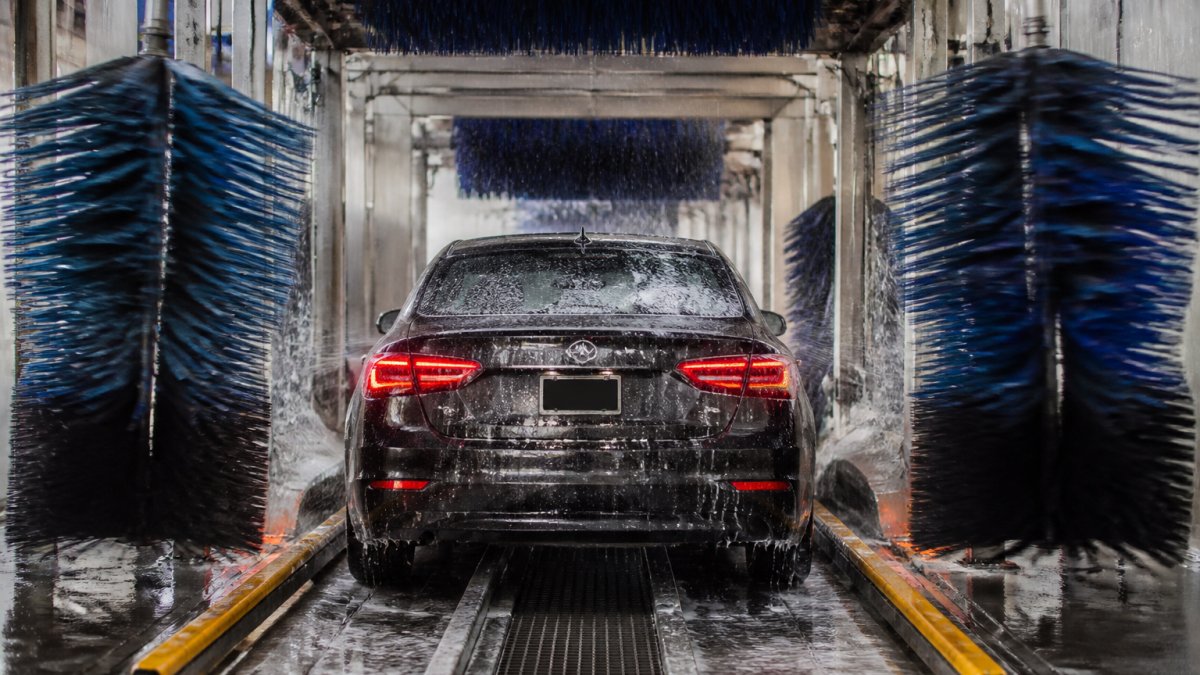
An express tunnel wash moves your car from entrance to exit in roughly three to five minutes, while the full visit from pull-in to pull-out usually runs seven to twelve minutes. The tunnel time is fixed, but queue time, package choice, and vehicle condition change the total.
- Queue time, tunnel time, and exit time are three separate clocks, and only tunnel time is fixed.
- Stage times add up to roughly 2 to 3.5 minutes of active washing inside the tunnel.
- Upgraded packages usually add 10 to 30 seconds inside the tunnel, not minutes.
- Weekend visits add 5 to 15 minutes, with Saturday late morning typically the busiest window.
- You can stay in the car during an express tunnel wash, which is a main reason the format is fast.
Table of Contents
- How Fast Is an Express Tunnel Wash? The Short Answer
- How Long Does an Express Car Wash Take From Pull-In to Pull-Out?
- Inside the Express Tunnel Car Wash Process, Stage by Stage
- What Drives Car Wash Wait Time at the Queue
- Express Tunnel vs In-Bay Car Wash: Which Moves Faster?
- Five Factors That Change How Long Your Wash Takes
- Staying in the Car and Other Prep Steps Before You Roll In
- Plan Your Next Quick Wash at Heroes Car Wash
- Frequently Asked Questions
How Fast Is an Express Tunnel Wash? The Short Answer
An express tunnel wash moves your car from the entrance to the exit in roughly three to five minutes. The full visit, from the moment you pull into the lot to the moment you drive away, usually runs seven to twelve minutes. That gap between tunnel time and total visit time is where most drivers get confused, so let’s separate the two.
Here is the direct answer: the wash cycle itself is fast. The wait around it is what varies.
At Heroes Car Wash, we run an express tunnel car wash built for exactly this kind of quick stop.
But first, here’s what most guides get wrong: they quote a single number and stop there. Speed depends on the queue, the package you pick, and how you prep your car.
How Long Does an Express Car Wash Take From Pull-In to Pull-Out?
An express car wash takes about seven to twelve minutes total for most drivers. The tunnel itself accounts for three to five of those minutes.
Think of it as three separate clocks running one after another:
- Queue time: how long you wait before the conveyor grabs your front tire
- Tunnel time: the actual wash cycle, from pre-soak to dryer
- Exit time: pulling off the conveyor and back into traffic
Only the middle clock is fixed. The other two move with traffic, time of day, and how busy the location is.
That is the distinction competitors tend to blur. A page that says “under five minutes” is describing tunnel time.
Inside the Express Tunnel Car Wash Process, Stage by Stage
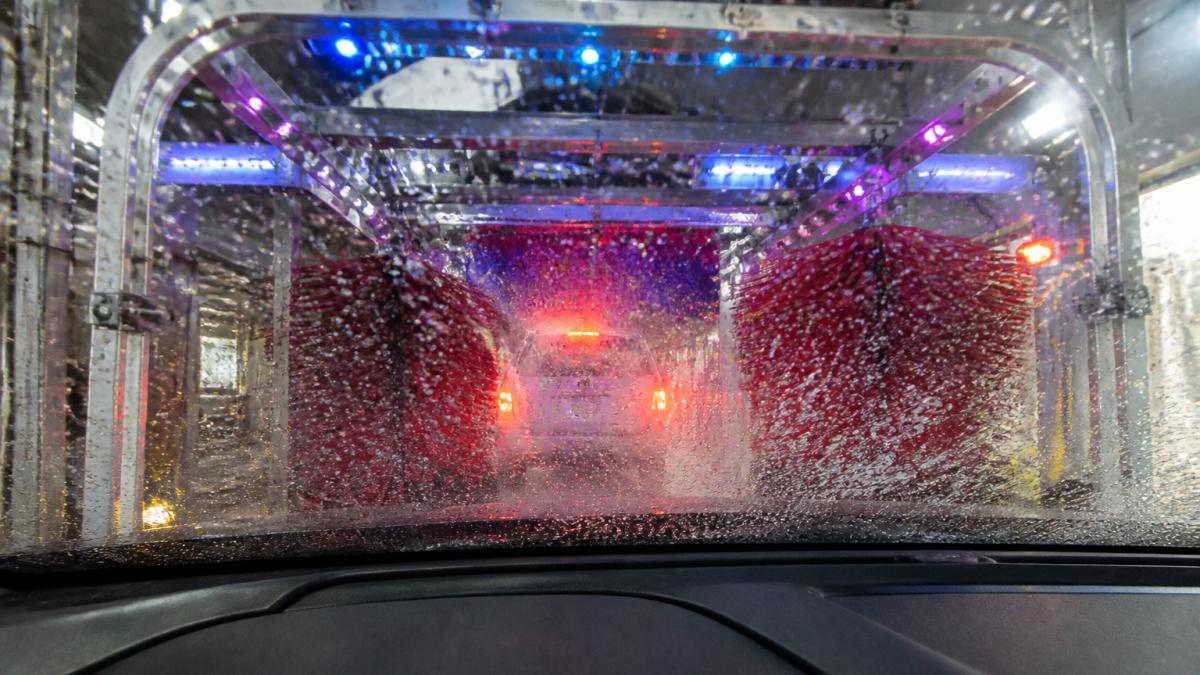
The express tunnel car wash process runs through a fixed sequence of stages, and each one has a job. Knowing the order and roughly how long each stage takes helps you understand why the wash is fast and what each package adds.
Pre-Soak and Soap Application (about 20-40 seconds)
Pre-soak loosens road film and bug residue before any brush touches the paint. Soap application follows, coating the vehicle in a foam that lifts dirt from the surface. This stage is short, usually under a minute, but it matters more than people think. A good pre-soak is why a three-minute wash can still clean a truck bed coated in dust.
Brushes, High-Pressure Rinse, and Wax (about 60-90 seconds)
Soft brushes or foam wraps scrub the exterior, then a high-pressure rinse blasts the loosened dirt away. Wax goes on last in this group, adding a protective layer that helps water bead off. Watch out: skipping the wax tier to save time backfires. A car without protection gets dirtier faster, which means you are back in the queue sooner.
Spot-Free Rinse and Air Dryer (about 45-75 seconds)
A spot-free rinse strips minerals from the water so droplets dry without leaving marks. Then the air dryer blasts the panels at the exit. The dryer is the last thing between you and the road. If your car still looks streaked at the exit, the issue is usually the rinse stage, not the brushes.
Add the stage times together and you get roughly 2 to 3.5 minutes of active washing. The rest of the 3-5 minute tunnel time is conveyor travel between stages and the gap between cars.
Why the Stages Are Ordered This Way
The sequence is not arbitrary. Pre-soak and soap need dwell time to break down dirt before mechanical action, brushes need lubrication from soap to avoid scratching, the rinse must remove soap before wax, and the dryer only works on a spot-free surface. Changing the order would either reduce cleaning or risk damage. That is also why higher packages add stages in the middle rather than at the end, an undercarriage spray or tire shine fits between the rinse and the dryer without slowing the line.
What Each Package Adds to the Clock
A basic express wash runs the core stages above. Upgraded packages typically add a second soap pass, wheel cleaner, undercarriage spray, or a longer wax cycle. Each addition usually adds 10 to 30 seconds inside the tunnel, not minutes. The bigger time difference between packages is often at the pay station, where a driver choosing add-ons takes longer to decide.
What Drives Car Wash Wait Time at the Queue
Car wash wait time comes down to vehicle throughput and how many cars show up at once. An express tunnel can push a steady stream of cars per hour, but a burst of arrivals creates a backup that no amount of brush speed can fix.
Here is what actually moves the queue:
- Peak hours: mornings before work and weekend mid-days draw the longest lines
- Car count per hour: how many vehicles the location can feed through the conveyor
- Package mix: drivers who add services take slightly longer at the pay station
A common mistake is judging a wash by one visit. One quiet Tuesday tells you nothing about a Saturday at noon. If you want a fast stop, go early or mid-afternoon on a weekday.
Express Tunnel vs In-Bay Car Wash: Which Moves Faster?
An express tunnel wash is faster than an in-bay wash in almost every case.
That difference in vehicle throughput is the whole ballgame. A tunnel keeps cars moving; an in-bay sits still.
Here is the side-by-side:
| Feature | Express Tunnel Wash | In-Bay Car Wash |
|---|---|---|
| Cars washed at once | Several in sequence | One at a time |
| Typical tunnel time | 3-5 minutes | 5-10 minutes |
| Driver stays in car | Yes | Usually yes |
| Throughput | High, steady stream | Limited by single bay |
| Best for | Fast weekday stops | Heavier soil, low volume |
If speed is the goal, the tunnel wins. If your car is caked in mud, an in-bay with more contact time may clean it better.
You can compare wash packages and memberships to see what each tier includes before you pick.
Five Factors That Change How Long Your Wash Takes
Five things shift the clock on any given visit. None of them are secrets, but most drivers only notice them after a slow trip. Here is how each one actually moves the timeline, with typical ranges so you can plan.
1. Time of Day (queue adds 0-15+ minutes)
Peak hours add queue time. Weekday mornings before work and weekend mid-days draw the longest lines because arrivals bunch up faster than the conveyor can feed cars through. Off-peak visits, early morning, mid-afternoon on a weekday, or late evening, often skip the queue entirely. The tunnel time does not change with the hour; only the wait around it does.
2. Day of the Week (weekends add 5-15 minutes)
Weekends draw families, fleets, and errand-runners at the same time. Saturday late morning is typically the busiest window of the week at an express tunnel. A Tuesday at 10 a.m. and a Saturday at 11 a.m. can differ by ten minutes or more in total visit time even though the wash cycle is identical.
3. Weather (the first clear day adds a backlog)
Rain pushes visits to the next dry day, and the backlog shows. The first sunny day after a storm often produces a line that lasts most of the afternoon. If you can wait one more day, the queue usually normalizes. Conversely, a light drizzle can empty a lot, some drivers avoid washing in rain even though the tunnel handles it fine.
4. Wash Package (adds 10-30 seconds in the tunnel, more at the pay station)
Higher tiers add stages like wax, wheel cleaner, or undercarriage spray. Each stage adds seconds inside the tunnel, not minutes. The bigger delay is often at the pay station, where a driver deciding between packages holds up the line behind them. Members with license plate recognition skip that decision entirely.
5. Vehicle Size and Condition (adds 0-60 seconds)
A lifted truck or a mud-covered SUV takes more contact time than a clean sedan because the equipment needs to cover more surface and may run a heavier pre-soak. Heavily soiled vehicles can also trigger a second pass in some tunnels. Clean, average-size cars move through at the fastest end of the range.
If you want the fastest possible visit, combine off-peak timing (weekday mid-morning), a pre-selected package or membership, and an average-size, lightly soiled vehicle. That combination typically lands you at the low end of the 7-12 minute total visit range.
Frequent washers feel these factors most. If you wash weekly, a membership smooths out the cost and the routine. We share more car care tips and membership news for drivers who want to stay ahead of the dirt.
Staying in the Car and Other Prep Steps Before You Roll In
You can stay in the car during an express tunnel wash. That is one of the main reasons the format is fast.
Prep takes thirty seconds and saves you a headache:
- Roll up all windows and close the sunroof
- Fold in the side mirrors if the location asks
- Turn off your wipers and keep the engine off
Watch out: leaving a roof rack strap or antenna loose is the most common cause of damage at any tunnel.
If you have questions about hours, location, or how the wash works, our frequently asked questions page covers the practical details.
Plan Your Next Quick Wash at Heroes Car Wash
Speed is the point of an express tunnel wash, and the numbers back it up: a few minutes in the tunnel, a short wait around it, and you are back on the road.
We built Heroes Car Wash around that idea. Our express tunnel format keeps cars moving, and our unlimited memberships skip the pay-station line with license plate recognition.
Ready to make the quick wash a habit? Find our address and hours and plan your first visit. If you wash often, check the unlimited membership options and see which tier fits your routine.
Get started with Heroes Car Wash.
Frequently Asked Questions
How long does an express tunnel car wash take?
Most express tunnel wash cycles run about 3 to 5 minutes from the moment your car enters the tunnel to the moment it exits the air dryer. Add a few minutes for paying, queuing, and pulling out, and a typical visit lands closer to 8 to 12 minutes. At Heroes Car Wash, the express tunnel wash format is built around that short tunnel time so you can get in and out before your commute.
Does the wash time include waiting in line?
No. Tunnel time and total visit time are two different numbers. Tunnel time is the 3 to 5 minutes your car spends moving through the wash process, from pre-soak to air dryer. Total visit time includes the queue, the pay station, the tunnel, and the exit. On a busy Saturday, car wash wait time at the queue can add 5 to 15 minutes, so plan around peak hours if you’re on a tight schedule.
Is an express tunnel wash faster than an in-bay automatic wash?
Yes, in most cases. An in-bay automatic wash keeps one car in a single bay for the full cycle, usually 5 to 8 minutes or more, and the next car has to wait for that bay to clear. An express tunnel wash moves cars through on a conveyor, so multiple vehicles are cleaned at once and vehicle throughput climbs to dozens of cars per hour. That conveyor setup is why express tunnel vs in-bay comparisons usually favor the tunnel for speed.
What can make an express tunnel wash take longer?
Queue length, peak hours, a heavy dirt or mud load, and add-on service options like extra wax or an undercarriage treatment all stretch the visit. Weather matters too: after a rainstorm, cars per hour can drop as more drivers show up at once. Choosing a wash package before you arrive and visiting outside rush periods keeps your total visit time close to the tunnel time.
Most drivers waste time guessing when the line will be short. We would rather you just pull in, roll through, and get on with your day. Heroes Car Wash runs an express tunnel built for exactly that, with unlimited memberships that keep the cost predictable and a veteran-support mission behind every wash. Get started with Heroes Car Wash and make your next wash the fastest errand on your list.
